

A cracked tile, loose shingle, worn flashing detail, or failing seam is visible because it affects the roof covering. The roof deck is different. It is the structural layer beneath the roofing materials, so its condition cannot be judged by looking at one damaged tile or one ceiling stain alone.
That distinction matters when a repair is planned. A surface issue may be limited to the roofing materials that keep water out. If moisture has reached the deck, the repair scope can change because the affected area must be evaluated beneath the visible covering. The right answer depends on the inspection findings, not on the surface symptom by itself.
Surface damage: problems in the weather-protection layers
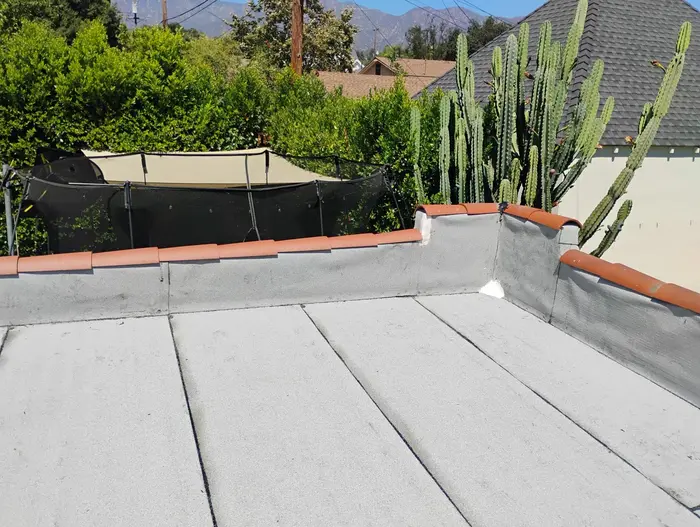
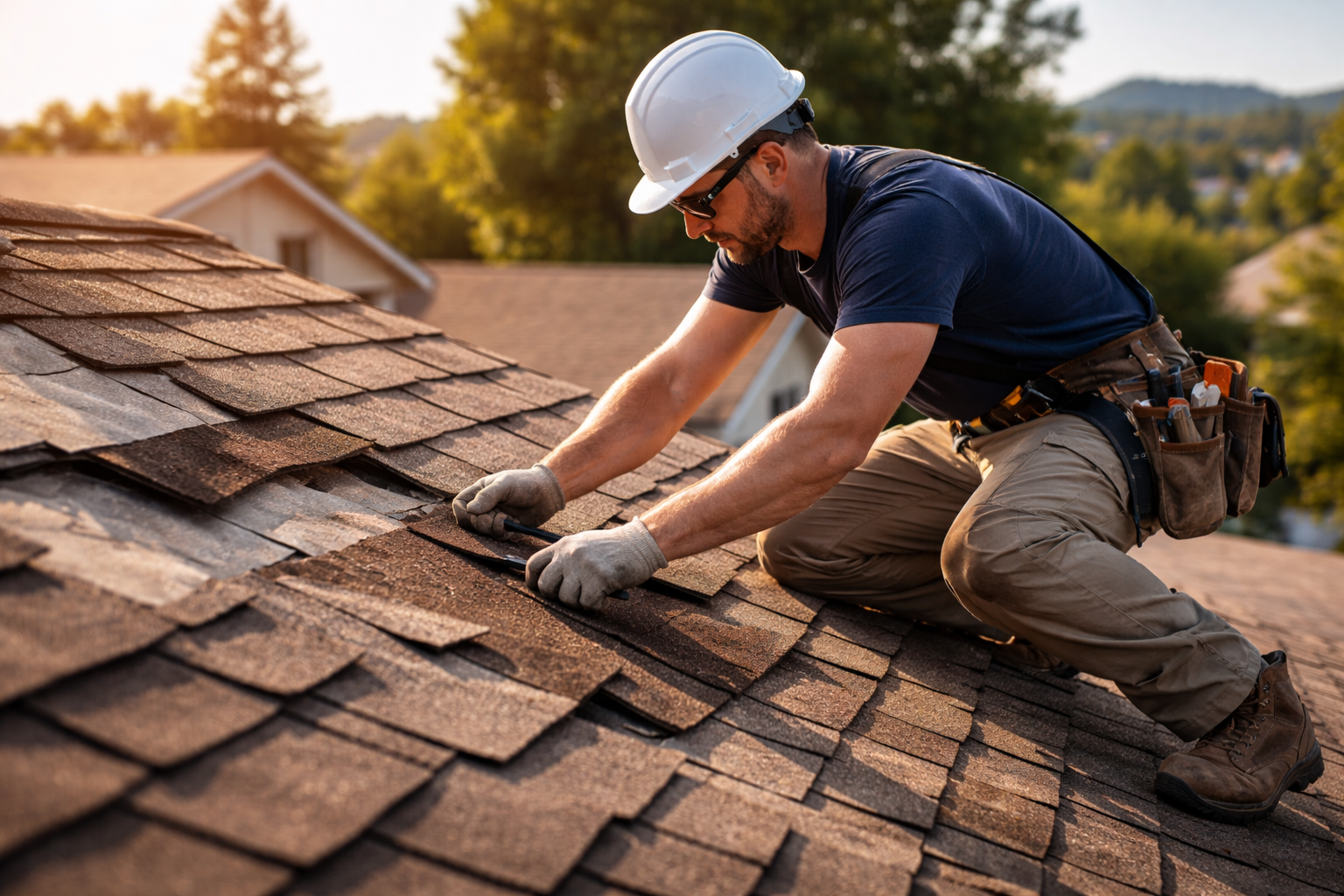
Surface damage affects the roof-covering and weather-protection layers. On a shingle roof, that may mean missing or damaged shingles, worn flashing, or a problem at a vent or roof penetration. On a tile roof, a cracked, slipped, or broken tile can leave the layers beneath it exposed. On a flat or low-slope roof, the concern may be a damaged seam, worn coating, drainage detail, or ponding-water area.
These issues should be addressed before they allow water to move farther into the roof system. Still, surface damage does not automatically mean that the roof deck has been affected. A targeted repair may be enough when the surrounding materials are dry, stable, and in sound condition.
Deck damage: when the problem goes below the visible roof covering
The roof deck supports the materials above it. When a roof professional suspects that moisture has reached this layer, the inspection needs to determine the location and extent of the affected section before the repair can be defined.
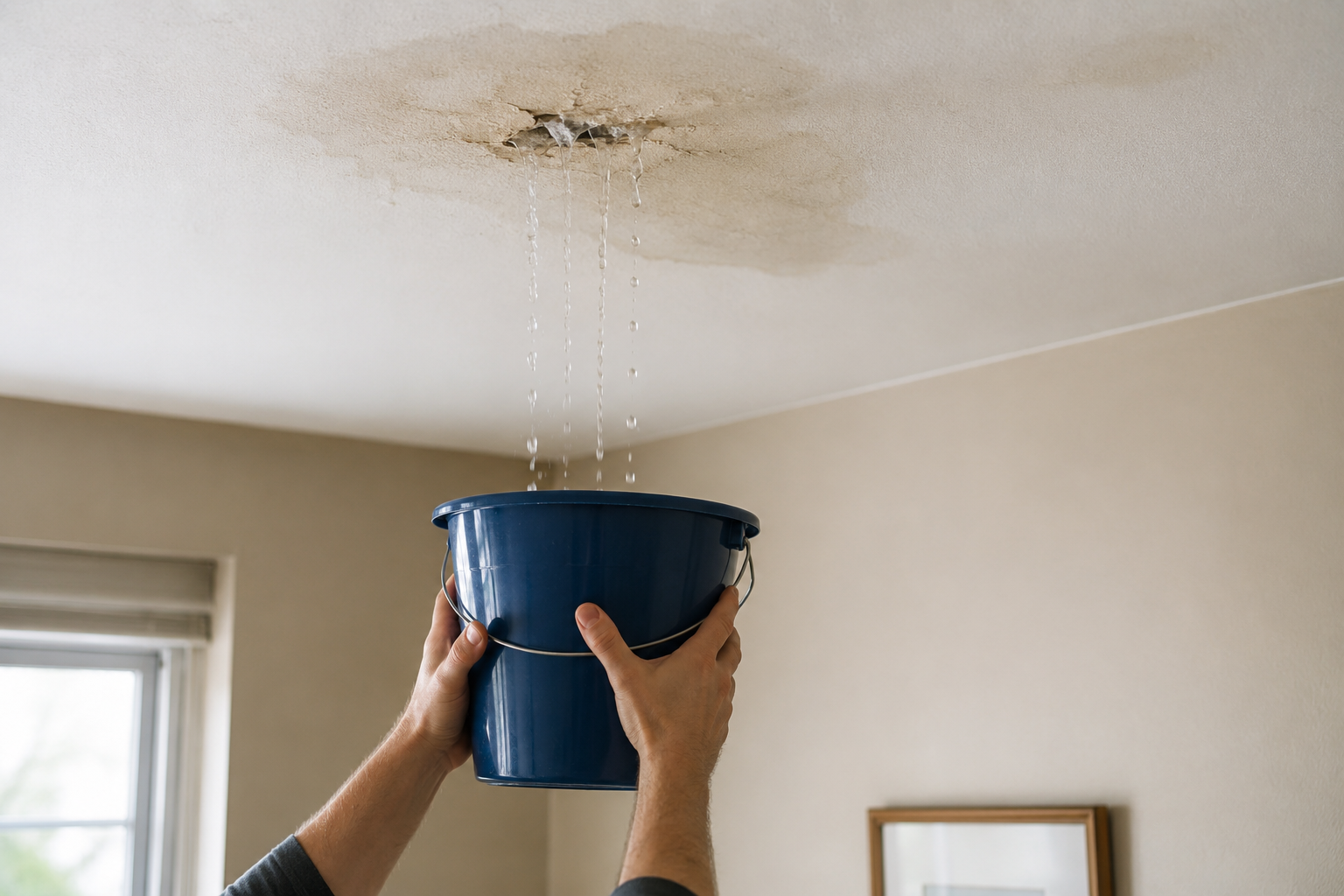
Deck-related concerns can appear as localized softness, sagging, or a recurring problem in the same roof area. Interior staining can be part of the picture, but it does not establish the source on its own because water can travel before it becomes visible inside. A proper inspection follows the moisture path and checks the roof components around it.
The practical difference is simple: replacing the visible roofing material can resolve a surface-only problem, while a deck concern may require access below the roofing layers to assess and repair the affected area. The inspection should make that distinction clear before work begins.
How an inspection separates one problem from the other
A roof inspection starts with the visible condition of the roof and the components around the suspected area. Flashing, penetrations, skylight surrounds, drainage points, shingles, tiles, seams, and the adjacent roofing material all matter because a leak can start at one weak point and show up somewhere else.
The inspector also looks for clues that the issue extends beyond the exterior layer. On a tile roof, for example, the repair question is not only whether a tile is broken but whether the materials beneath it have remained protected. On a flat or low-slope roof, a drainage or seam issue should be evaluated with the nearby roof surface rather than treated as an isolated spot. Around skylights, vents, and wall connections, the surrounding flashing and roof materials need to be considered together.
When the inspection indicates that the area below the roofing material needs evaluation, the repair plan should explain why access is needed, what section is affected, and which related components will be addressed. That gives the property owner a clear basis for comparing a focused repair with a larger repair scope.
What changes when the deck is affected
A deck concern does not automatically require a full roof replacement. The scope depends on the affected area, the condition of nearby materials, and the source of the moisture entry. An isolated issue beneath a failed flashing detail may call for a localized repair after the source has been corrected. A wider area of deterioration or repeated moisture problems may require a broader repair plan.
The priority is to solve both parts of the problem: the point where water entered and the condition of the materials it reached. Repairing only the visible symptom can leave the source unresolved. On the other hand, assuming a full replacement is necessary without an inspection can lead to work that does not match the actual condition of the roof.
Questions to ask about a deck-related repair
Before approving a repair, ask questions that focus on the condition found during the inspection:
- What is the likely point where water entered the roof system?
- Is the issue limited to the surface materials, or does the area below them need evaluation?
- Does the proposed work include the surrounding flashing, drainage, skylight, vent, or penetration details that may have contributed to the problem?
- Which part of the roof will be opened or repaired, and why?
- What condition would make a localized repair unsuitable?
- What should be checked after the repair is complete?
Clear answers help homeowners and property managers understand what is being repaired and why. They also make it easier to compare repair proposals based on scope rather than on a single line item.
Arrange an inspection before a small problem grows
Visible roof damage, recurring stains, a soft or uneven area, damaged flashing, cracked tiles, missing shingles, skylight concerns, or drainage problems all deserve a professional inspection. A1 American Roofing is a licensed California contractor, License #1052709, serving Los Angeles homes and businesses. Its roof-repair service includes leaks, flashing, shingles, tile roofs, flat roofs, skylights, roof deck damage, and storm-related damage. To discuss the source of a roof problem and the appropriate next step, request professional roof repair in Los Angeles.

 WhatsApp
 Call Now