


By A1 American Roofing · October 11, 2026
A water stain on a ceiling can come from a roof leak, plumbing, an air-conditioning drain, or condensation. The stain alone cannot identify the source. Start by noting when it changes: after rain, after using an upstairs fixture, or while the air conditioner runs. Those observations help the right professional trace the moisture before you pay for the wrong repair.
This guide explains what you can observe safely from inside your home, which clues matter, and whether to contact a roofer, plumber, or HVAC technician. If water is actively entering after a storm, use our guide to what to do first after a roof leak in heavy rain.
Does a brown ceiling stain always mean the roof is leaking?
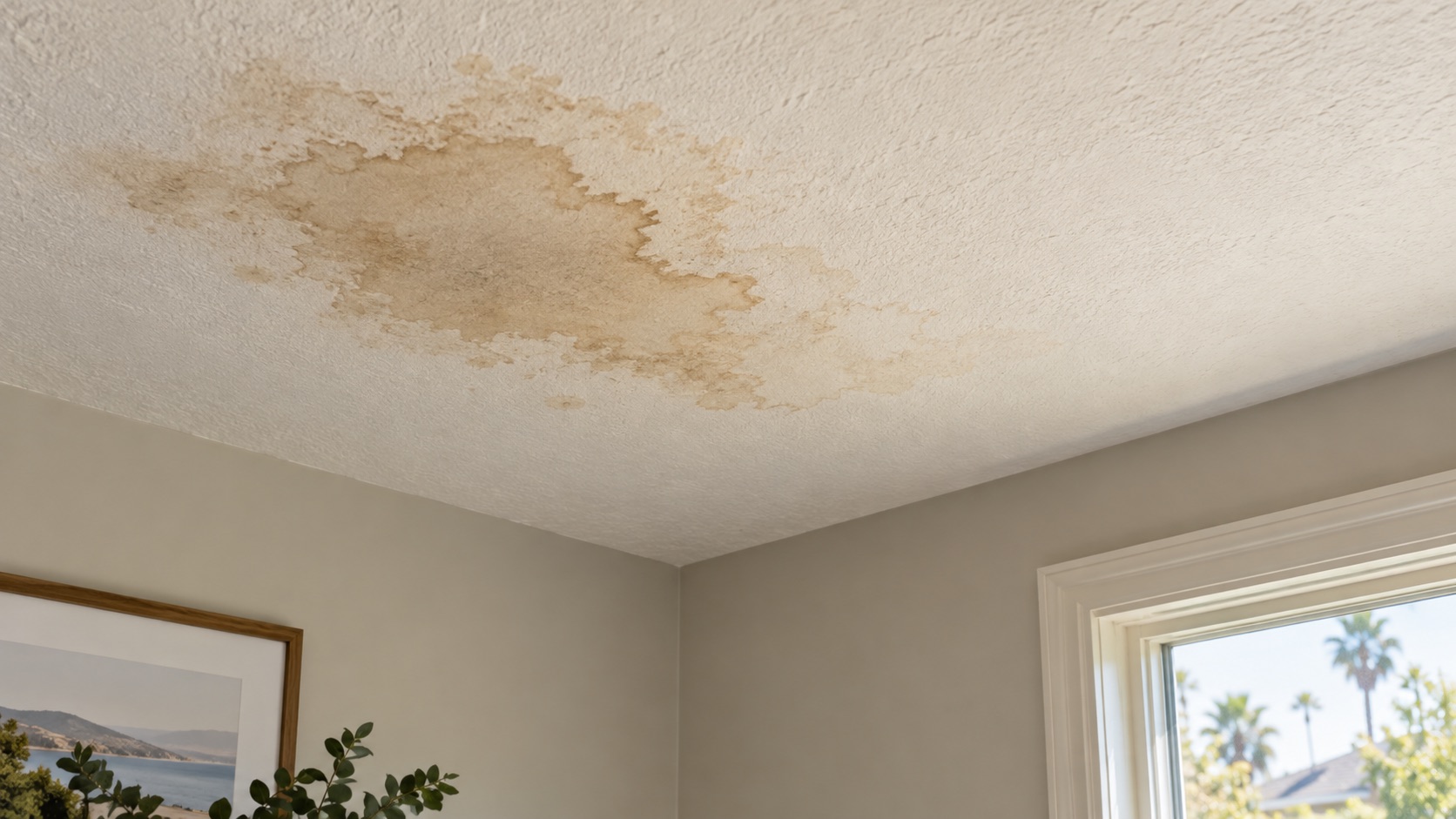
No. A brown or yellow ring shows that moisture has affected the ceiling finish at some point; it does not establish where the water started or whether the leak is still active. Roof leaks are one possibility, particularly on a top-floor ceiling after rain. A bathroom above the room, nearby pipes, or HVAC equipment can point to a different investigation.
The U.S. Environmental Protection Agency identifies roof leaks, plumbing leaks, and condensation among common sources of moisture in buildings. That is why the timing and location of a stain are more useful than its color alone. More than one moisture source can also affect the same area.
Roof leak, plumbing leak, or condensation: which clues matter?
Use this comparison to organize your observations. These are clues to share with a contractor, not a diagnosis or a reason to open the ceiling yourself.
| What you notice | Possible source to investigate | Who to contact first |
|---|---|---|
| The stain grows during or after rain on the top floor. | Roof covering, flashing, a roof penetration, or another exterior entry point. | A roofing contractor; mention nearby windows or walls too. |
| The stain changes after an upstairs shower, bath, or appliance runs. | A supply pipe, drain, fixture connection, or waterproofing around a wet area. | A plumber. |
| Dripping or dampness appears near HVAC equipment when cooling runs. | A condensate drain, drain pan, or moisture forming around cold components. | An HVAC technician. |
| Damp patches recur in humid conditions without a clear rain or fixture pattern. | Condensation, ventilation, insulation, or another hidden moisture source. | A qualified building or HVAC professional; involve a roofer if roof evidence appears. |
| An old stain stays unchanged and no recent moisture is apparent. | A past leak or an intermittent source that has not been resolved. | The relevant contractor to confirm the source and drying before cosmetic repairs. |
What if the stain appears only after rain?
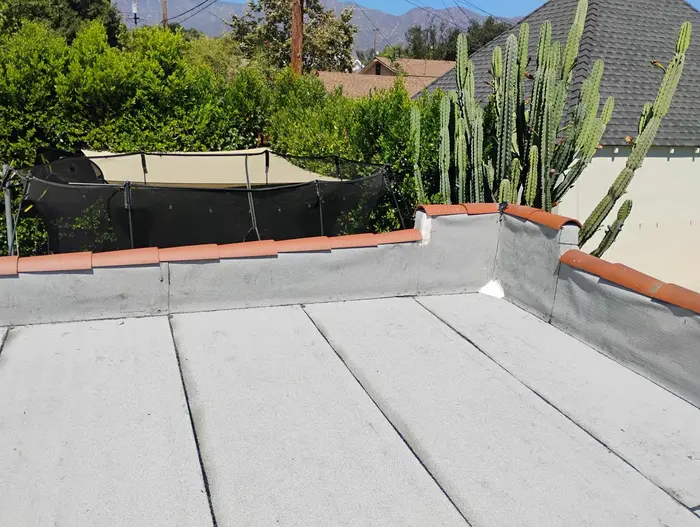
Rain-related staining on a top-floor ceiling makes exterior water intrusion worth investigating. A roofer may check the roof covering, flashing around walls and chimneys, skylights, vents, valleys, and drainage areas. Water can follow building components before becoming visible indoors, so the spot on the ceiling does not necessarily sit directly beneath the entry point.
Tell the roofer whether the problem happens in every rainstorm, only with wind, or after prolonged rain. Include the time between the rain and the first visible drip. In Los Angeles, a long dry interval can make an intermittent problem seem to have disappeared even though its cause remains. A dry ceiling on the appointment day is still worth discussing.
A professional roof inspection can assess accessible roofing components and document the findings. Explain any limits on attic access or areas hidden behind finishes. A visual inspection may need follow-up investigation when the entry route cannot be established safely.
What if the ceiling is wet when it has not rained?
A ceiling that becomes wet during dry weather needs a broader investigation. Note whether a bathroom, laundry room, kitchen, water pipe, or air-conditioning unit is above or near the affected room. Recent use of a fixture is useful information, but it does not prove that fixture is the source. A concealed supply leak may continue independently of visible fixture use.
If the pattern follows normal use of an upstairs shower or appliance, stop using the suspected fixture and contact a plumber. Do not deliberately run more water to reproduce the leak. If the pattern follows cooling, tell an HVAC technician when the system runs and where the stain appears. Avoid touching wet equipment, switches, or electrical connections.
Dry weather does not rule out a previous roof leak. Materials may retain moisture after rainfall. Share both the recent weather history and any changes in household equipment use, so the inspection starts with the whole picture.
What can you check safely before the appointment?
- Photograph the ceiling from the floor. Take one photo showing the room and another showing the stain. Keep the date and time with your notes.
- Record the pattern. Note recent rain, normal fixture use, air-conditioning operation, and whether the affected area is changing.
- Describe what is above the room. Is it the roof, another apartment, an upstairs bathroom, or an equipment space? Tell the contractor if you are unsure.
- Gather previous repair information. An invoice, inspection report, or photo from an earlier leak can identify what was repaired and what was not.
- Keep people and belongings away from the affected area. Move possessions only if you can do so without standing under a damaged ceiling or approaching electrical hazards.
You do not need to climb onto the roof, enter a cramped attic, or cut a hole in drywall to provide useful information. Leave roof access, concealed-space access, moisture testing, and any controlled water testing to qualified professionals. A clear timeline often makes the initial visit more productive than an attempted patch.
When does a ceiling leak need urgent attention?
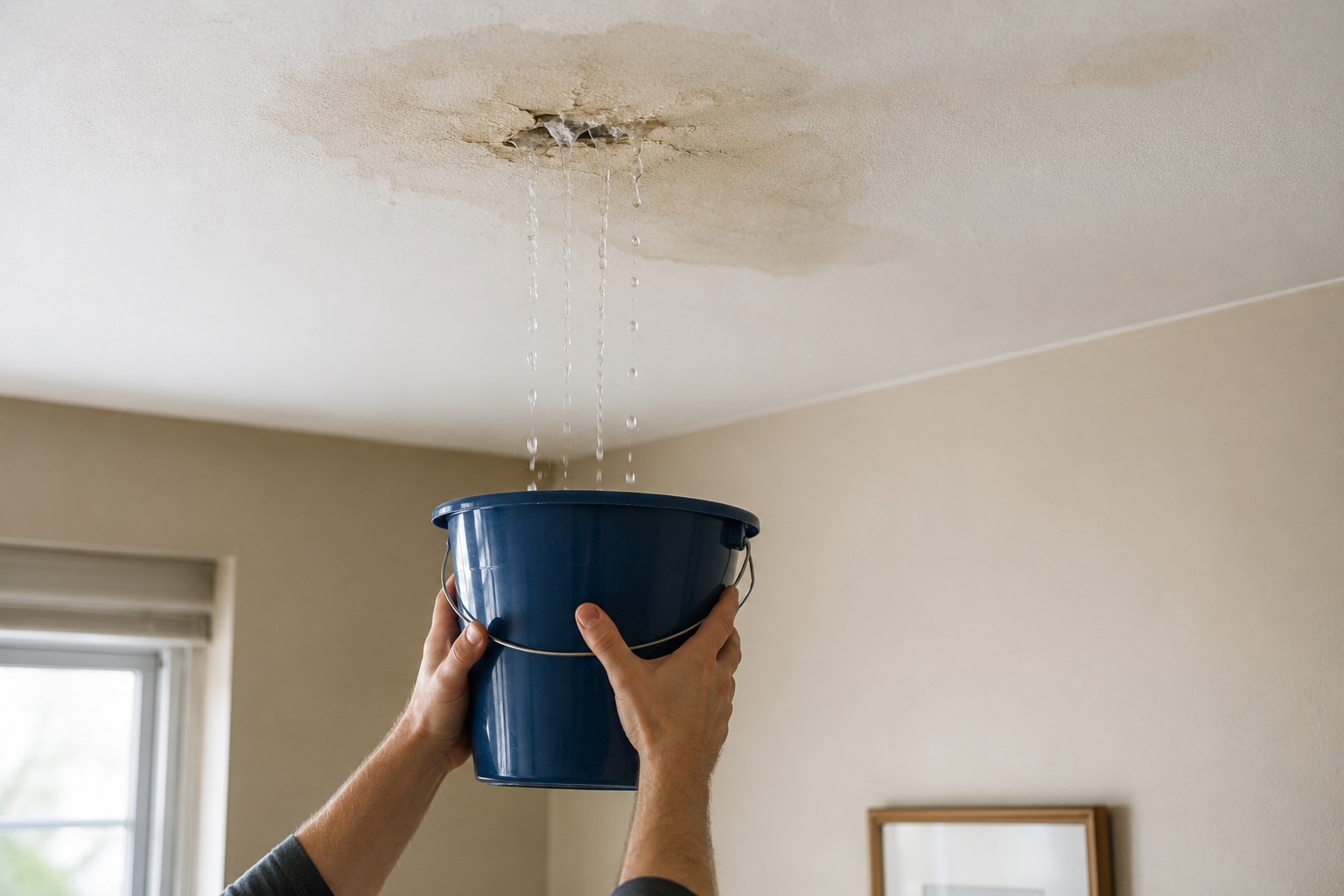
Keep everyone away from a ceiling that is bulging, sagging, cracking, or dropping material. Do not stand underneath it or puncture it to release water. If water is near a light fitting, outlet, or electrical equipment, avoid contact and get appropriate professional assistance. An immediate threat to people warrants emergency help.
Active water intrusion also deserves prompt attention even when the ceiling looks flat. Tell the contractor that water is currently entering, rather than booking the visit as a cosmetic stain problem. For a rental or shared building, notify the property manager promptly and explain whether another unit or a common roof may be involved.
If the inspection confirms a roofing source, roof leak repair should address the affected roofing detail. A ceiling patch alone will not stop water entering from above.
Should you call a roofer or a plumber first?
Call a roofer first when the pattern points to rain entering through a roof, especially on the top floor. Call a plumber first when staining follows an upstairs fixture or there is evidence of a plumbing leak. Call an HVAC technician when the pattern is associated with cooling equipment or condensate drainage.
When the source is unclear, describe the observations without labeling the problem a roof leak in advance. Ask what the visit will cover, which areas the contractor can access, and whether another trade may be needed. On a multi-story property, a leak from an upstairs unit can resemble a roofing problem from the room below.
Useful questions include: What evidence supports the suspected source? Is the proposed work diagnostic, temporary, or a permanent repair? Does the estimate include interior restoration? What additional work would require approval? These questions help separate finding the leak from repairing its consequences.
Can you paint over a dry ceiling stain?
Wait until the moisture source has been identified and corrected, affected materials have been assessed, and drying has been confirmed. A surface that looks dry does not tell you the condition of concealed insulation or other materials. A stain-blocking finish can hide discoloration, but it cannot repair a roof, pipe, or drainage problem.
The EPA’s remodeling guidance recommends correcting the underlying cause of damaged paint. If the stain returns after painting, record when it reappears and arrange another investigation. Do not repeatedly repaint an unresolved moisture problem.
Does a ceiling stain mean you need a new roof?
No. A stain does not show the extent of roof damage and may not be roof-related at all. Where a roofing defect is isolated and surrounding materials remain serviceable, a targeted repair may be appropriate. Broader deterioration, recurring failures, or damage to underlying materials can change that recommendation.
The next step is evidence about the roof’s condition, not a replacement decision based on an indoor mark. Our explanation of roof repair versus replacement describes the factors to discuss once the cause is known. If an inspection identifies deterioration below the surface, our guide to roof deck damage versus surface damage explains why that distinction matters.
What should you send when requesting a roof inspection?
Send the property address, affected room and floor, photos taken from a safe position, the date the stain first appeared, and whether it changes after rain. Include any known roof material, past repairs, and access restrictions. Do not delay an urgent call while collecting every detail.
A1 American Roofing provides roof inspection and repair services in Los Angeles and surrounding areas. If the evidence points to the roof, contact our team to discuss an inspection or call (310) 606-2629. Describe the moisture pattern so we can discuss the appropriate roofing next step; plumbing and HVAC faults need the relevant trade.

 WhatsApp
 Call Now