

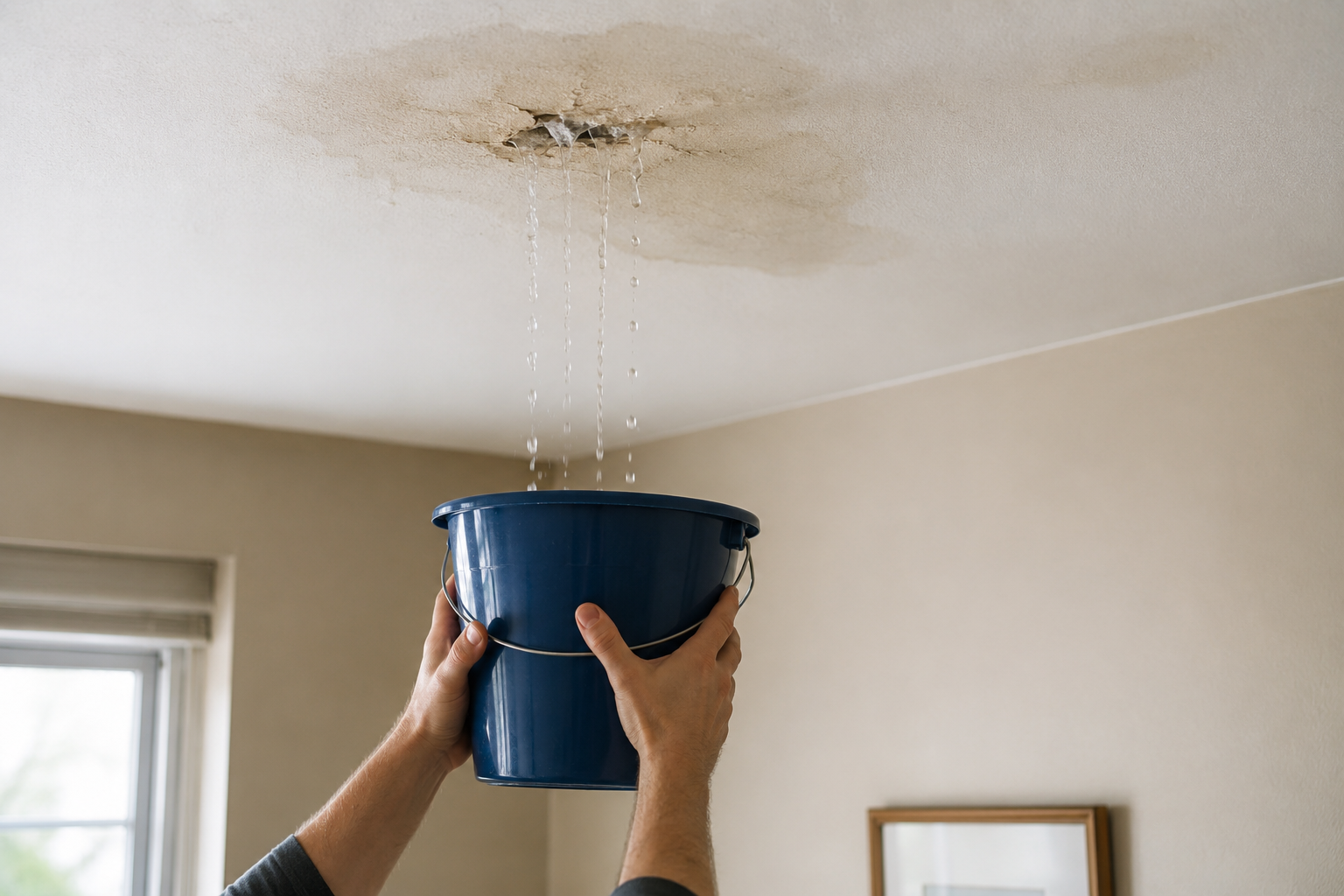
If your roof starts leaking after heavy rain in Los Angeles, first move furniture and valuables away from the leak, place a container under dripping water, avoid climbing onto the roof, and call a licensed roofing contractor for inspection. Many roof leaks come from damaged flashing, cracked shingles or tiles, clogged drainage, skylights, roof penetrations, or flat roof ponding. Fast roof repair can help prevent ceiling damage, mold concerns, insulation problems, and more expensive structural repairs.
A roof leak can feel sudden, but the weak point often existed before the storm. Los Angeles roofs deal with months of strong sun, UV exposure, dry heat, wind, debris, and then sudden heavy rain. That combination can expose small cracks, loose materials, or worn sealants very quickly. Knowing what to do in the first few hours can protect your home and help your roofer find the source of the problem faster.
Why Roof Leaks Often Appear After Heavy Rain in Los Angeles
Los Angeles is not known for constant rain, which is exactly why roof leaks can surprise homeowners. During long dry periods, roofing materials are exposed to heat and sunlight day after day. Shingles can dry out, tiles can shift or crack, sealants can weaken, and flashing around roof penetrations can become less reliable.
When heavy rain arrives, water looks for the easiest path into the roofing system. A small gap around flashing, a loose shingle, a cracked tile, or a clogged gutter may be enough to allow water to move under the roof surface. From there, water can travel before it finally appears as a ceiling stain or drip inside the home.
Wind can make the problem worse. Santa Ana winds and storm gusts may lift shingles, move debris, loosen tiles, or push rain into areas that normally stay dry. Flat and low-slope roofs can also develop ponding water when drains are blocked or when the surface is no longer moving water properly.
What to Do Immediately When You Notice a Roof Leak
The first priority is to reduce interior damage and stay safe. Move furniture, electronics, rugs, and valuables away from the leaking area. Place a bucket, bowl, or waterproof container under active dripping water. If water is spreading across a ceiling, keep people away from the area because saturated drywall can weaken.
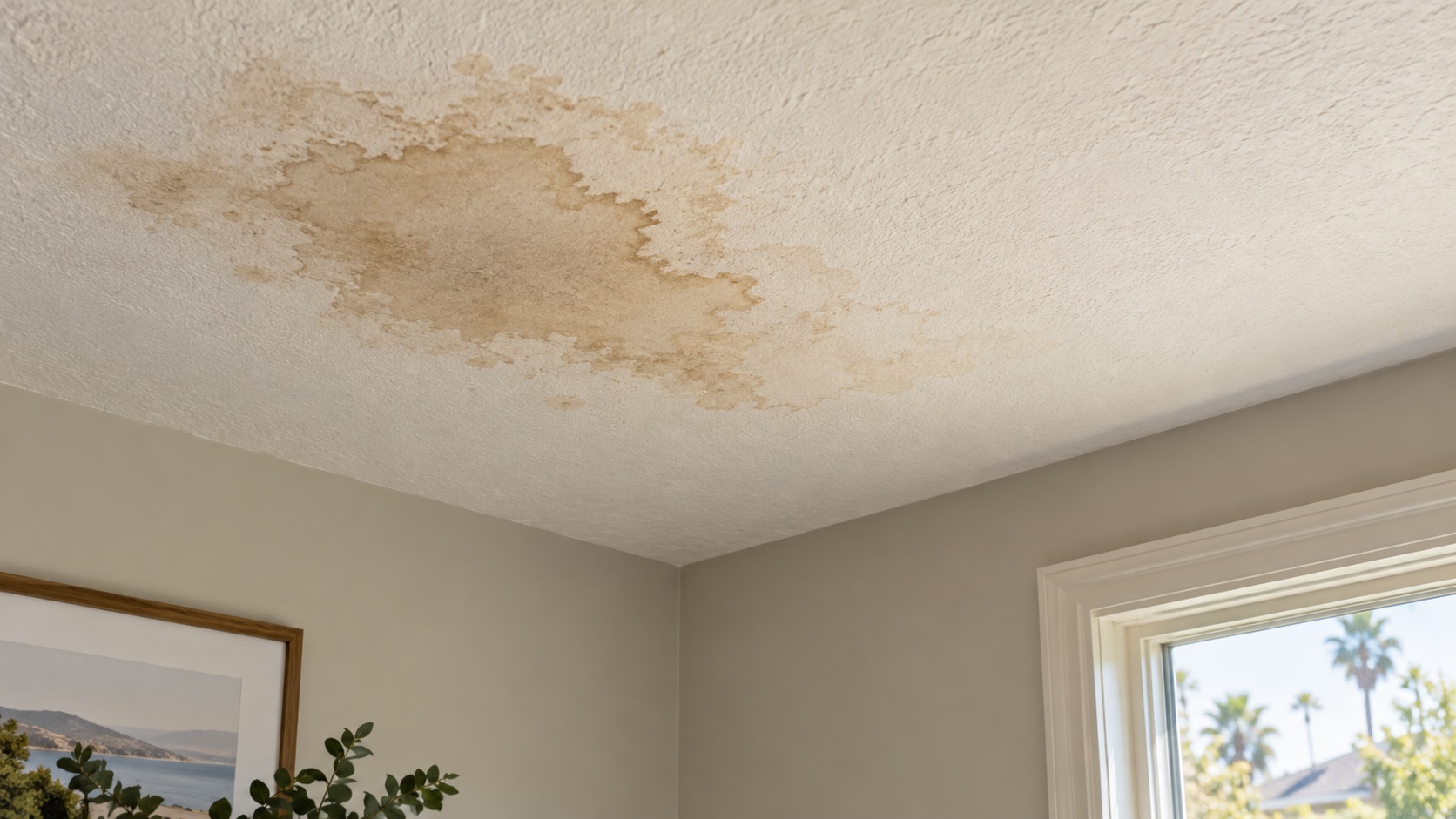
If it is safe, take photos or short videos of the leak, ceiling stains, wet walls, and any visible damage. This can help when explaining the issue to a roofing contractor and may be useful if you need to document damage for insurance. Do not remove roofing materials, cut into the ceiling, or climb onto the roof during rain.
Next, call a licensed roofer for a professional inspection. A roof leak is not always directly above the visible drip. Water may enter near a vent, skylight, chimney, wall flashing, or roof valley, then travel along framing before showing up inside. A professional inspection helps identify the real source instead of only treating the visible symptom.
What Not to Do During a Roof Leak
Do not climb onto a wet roof. Wet roofing materials are slippery, and strong rain or wind can make the situation unsafe. Even if the leak looks small, a temporary climb can turn into a serious injury risk.
Do not smear roofing cement, sealant, or tar over random areas without knowing the leak source. Temporary patches sometimes trap moisture or make later diagnosis harder. If a temporary repair is needed, it should be done carefully and only in the correct location.
Do not ignore a small stain because the leak stopped when the rain stopped. A roof leak may appear only during heavy rain or wind-driven rain, but the damaged area can remain open. The next storm may bring more water into the same weak point.
Do not assume the whole roof needs replacement. Many roof leaks can be fixed with targeted roof repair when the damage is limited and the rest of the roof is still in good condition.
Common Causes of Roof Leaks After Rain
Damaged or Loose Flashing
Flashing protects the transitions where the roof meets walls, chimneys, vents, skylights, and other openings. If flashing is loose, cracked, rusted, or poorly sealed, rain can enter around the edge and move behind the roofing system.
Cracked or Missing Shingles
Asphalt shingles can crack, curl, loosen, or lose granules after years of sun exposure. When shingles are missing or damaged, the roof deck and underlayment are more exposed to water intrusion.
Broken or Slipped Roof Tiles
Tile roofs are common in Los Angeles, but cracked or slipped tiles can expose the waterproofing layer below. The visible tile is only part of the system, so a roofer should check both the tile and the underlayment.
Skylight Leaks
Skylight leaks may come from the skylight unit, old sealants, damaged flashing, or roofing materials around the opening. The repair depends on whether the skylight itself has failed or the surrounding roof area needs attention.
Flat Roof Ponding Water
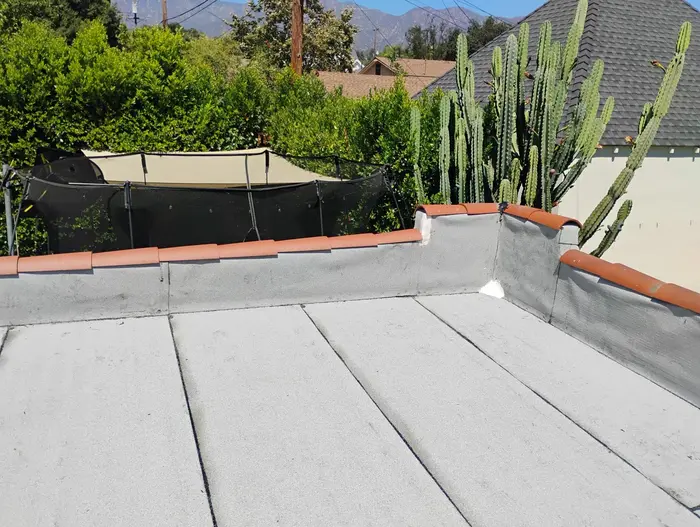
Flat and low-slope roofs need proper drainage. When water sits too long, it can expose cracks, seams, coating problems, or weak areas in the roofing membrane. Ponding water should be inspected before it becomes a recurring leak.
Clogged Gutters and Roof Drains
Leaves, palm debris, dirt, and storm debris can block gutters or drains. When water cannot flow away from the roof, it may back up under roofing materials or overflow into areas that were not designed to hold standing water.
How a Roofing Contractor Finds the Source of the Leak
A roofing contractor will usually begin by asking where the leak appeared, when it started, and whether it happens only during heavy rain or also during lighter rain. The inspection may include checking the ceiling, attic, roof surface, flashing, vents, skylights, gutters, drainage areas, shingles, tiles, and flat roof seams.
The goal is not just to stop the visible drip. The goal is to understand how water entered the roof system and whether the damage is isolated or part of a larger issue. For example, a ceiling stain near a bathroom may point to a pipe flashing issue, while a leak near an exterior wall may point to step flashing or wall flashing.
Once the source is identified, the roofer can recommend the correct repair. That may include replacing damaged shingles or tiles, repairing flashing, resealing a roof penetration, correcting drainage, repairing flat roof seams, or addressing roof deck damage if water has been entering for a longer period.
Can a Roof Leak Be Repaired Without Replacing the Whole Roof?
Yes, many roof leaks can be repaired without replacing the whole roof. Repair is often the right option when the leak is limited to a specific area and the rest of the roofing system is still performing well. Examples include a damaged flashing section, a cracked tile, a few missing shingles, a skylight flashing problem, or a small flat roof seam issue.
Replacement may be the better option when the roof has widespread deterioration, repeated leaks in different areas, major deck damage, or materials that are near the end of their useful life. The right answer depends on the roof’s age, material, condition, and the extent of the damage.
If you are unsure, a professional roof repair inspection in Los Angeles can help you decide whether targeted repair is enough or whether a larger roofing solution is needed. You can also read A1 American Roofing’s guide on when roof repair is better than roof replacement in Los Angeles.
How Fast Should You Fix a Roof Leak?
A roof leak should be inspected and repaired as soon as possible. Water can move through insulation, framing, drywall, and wall cavities before the full damage is visible. Even a small drip can lead to staining, mold concerns, wood rot, damaged insulation, electrical concerns, or a larger repair if it continues through multiple storms.
Fast repair is especially important after heavy rain because the leak may stop once the weather clears. That does not mean the roof is fixed. It may simply mean there is no more water entering at that moment. The weak point can still be open and may leak again during the next storm.
Professional Roof Leak Repair in Los Angeles
A1 American Roofing provides roof repair services for Los Angeles homeowners and businesses dealing with leaks, storm damage, flashing problems, damaged shingles, cracked tiles, skylight leaks, and flat roof issues. The company displays California License #1052709 and works with local roofing conditions that include strong sun, sudden rain, wind, and drainage challenges.
If your roof is leaking after heavy rain, do not wait for the next storm to confirm the problem. Schedule a professional inspection so the source can be identified and the right repair can be completed. A targeted repair at the right time can protect the property, reduce interior damage, and help extend the life of the existing roof when repair is still the best option.
Need help with an active leak or roof damage? Contact A1 American Roofing for professional roof repair in Los Angeles.
FAQs About Roof Leaks After Heavy Rain
What should I do if my roof leaks during rain?
Is a roof leak an emergency?
Can I patch a roof leak myself?
Why does my roof only leak during heavy rain?
How much does roof leak repair cost in Los Angeles?
The cost depends on the source of the leak, roofing material, accessibility, and the amount of damage. Minor repairs may be less expensive than repairs involving deck damage, skylights, flat roof systems, or multiple leak points. For pricing context, read A1 American Roofing’s roof repair cost guide for Los Angeles.

 WhatsApp
 Call Now